What TCOLE Is and Why It Sets the Standard
TCOLE is the Texas Commission on Law Enforcement. It is the state body that licenses peace officers and sets the professional standards every officer in Texas must meet to carry a badge. That includes the training required to earn a license and the continuing education required to keep one. When a course is described as TCOLE accredited, it means that course has been reviewed against those standards and approved to count toward an officer's training record.
This matters because not all training is equal in the eyes of the state. An officer can spend a day on a range, fire several hundred rounds, and walk away with no record that satisfies a single state requirement. The shooting may have been useful. It may even have been good practice. But to TCOLE it did not happen. Accreditation is the difference between practice and credit.
What Accreditation Actually Means for a Course
Accreditation is not a stamp a facility gives itself. It is a verification that a specific course meets defined criteria: a documented curriculum, qualified instructors, measurable objectives, and a system for tracking who completed what. When those pieces are in place and approved, the hours an officer earns are reported and recorded against their license.
There are three things accreditation gives you that a generic class cannot:
- Continuing-education credit. Texas peace officers must complete ongoing training to remain in good standing. Accredited hours count toward those mandates. Unaccredited hours do not, no matter how rigorous the day was.
- Verified curriculum standards. An accredited course has been built to a defined standard and reviewed against it. The content is not improvised between volleys. It follows a plan that someone other than the instructor has examined.
- Accountability. Completion is documented and reportable. If a question ever arises about an officer's training history, there is a record that holds up. That record protects the officer, the agency, and the public.
How TBG's Accreditation Works
The Benjamin Guard holds its accreditation through Grayson College. That partnership is what allows qualifying courses run at the facility to count toward an officer's continuing-education requirements. The accreditation is not a marketing line. It is an institutional relationship that ties the training delivered here to a recognized academic provider and to the state's reporting system.
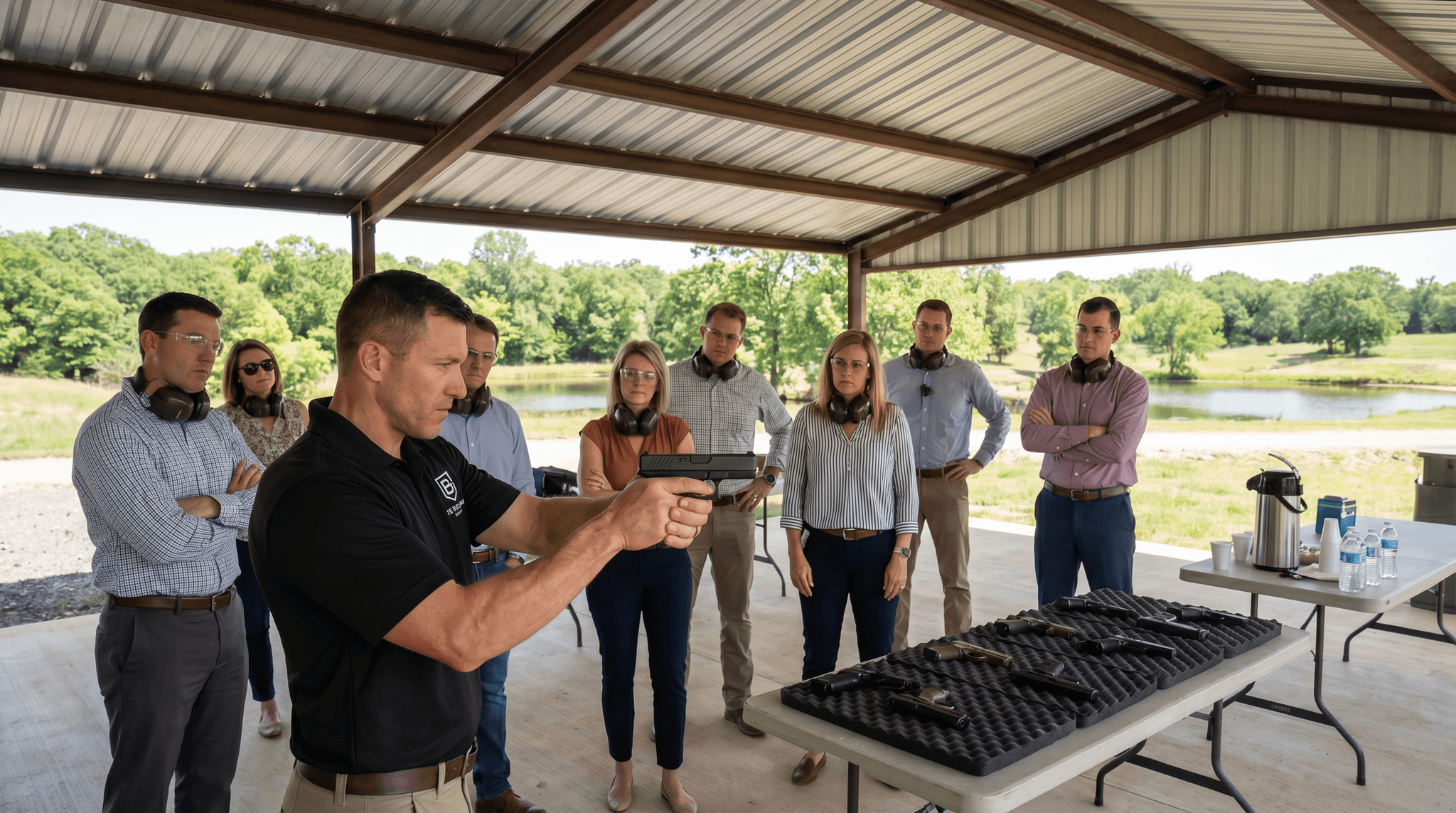
Practically, this means an officer or agency can send personnel to a qualifying course and know that the hours will be recorded, not lost. The facility itself was built for the kind of work that standards require. The Dynamic Bay runs live-fire scenario training 150 yards deep and 100 yards wide, with vehicles and other props brought in for realism. The Shoot House Complex offers more than 6,000 square feet of dry-fire structures for force-on-force and entry work. Courses such as Tactical Vehicle Operations, Combat Pistol, and Combat Carbine are delivered in these spaces. The current schedule and which sessions carry credit are listed on the training page.
Why Accredited Training Beats a Generic Range Day
A range day has its place. It is open, it is flexible, and it builds repetitions. But for a working officer or an agency managing a roster of them, a range day alone is an incomplete answer. It produces no record, meets no mandate, and rests entirely on whoever happens to be running it that afternoon.
Accredited training closes those gaps. The curriculum is defined. The instruction is delivered by a team with backgrounds in special operations, federal contracting, and international law enforcement instruction. The hours are documented and count toward the requirements the officer already has to meet. An agency that chooses accredited training is not paying more for the same thing. It is paying for training that does double duty: it builds skill and it satisfies the obligations the state imposes.
FIELD NOTE —If the training was real, the record should prove it. Accreditation is how the record gets made.
For an agency, this also simplifies budgeting and planning. Training dollars spent on accredited courses produce a measurable, reportable return. There is no ambiguity about whether a given session counts. That clarity is worth as much to a training officer as the marksmanship itself.
Putting It to Use
If you are an officer or an agency training coordinator, the question is not whether your people are getting trigger time. It is whether that time is building a record the state recognizes. Accredited courses at TBG do both. Review the qualifying courses and current dates on the training page, or reach out through the contact page to discuss agency scheduling and which sessions fit your continuing-education needs.