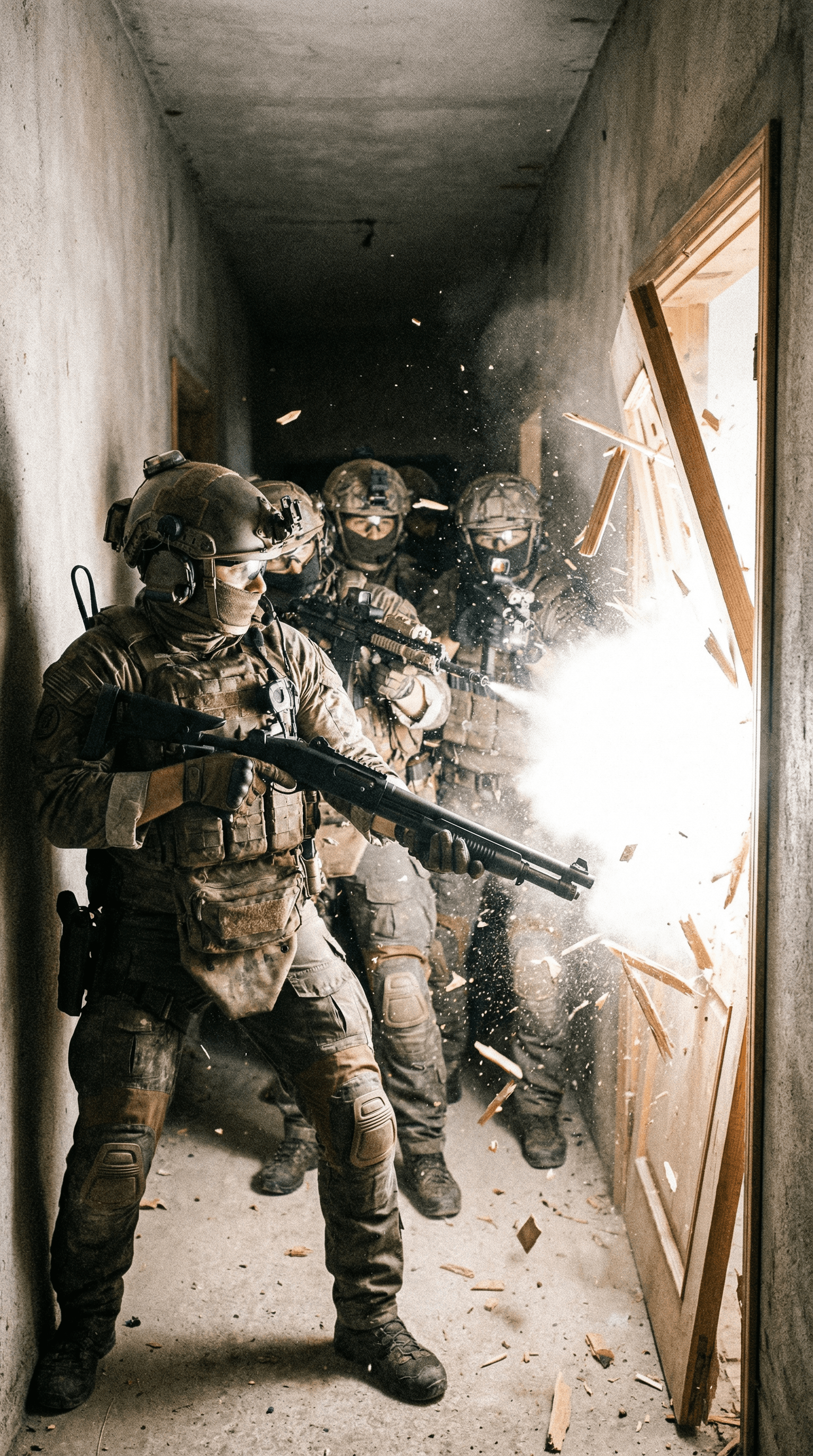
What Civilian Tactical Training Actually Is
Most armed citizens follow the same path. They buy a firearm, complete a minimum-standard license course, and stop there. That course teaches enough to satisfy a legal requirement. It does not teach you to perform under stress, move with purpose, or make sound decisions when seconds matter. Civilian tactical training closes that gap. It is practical personal-safety skills development, not military cosplay.
The goal is competence, not theater. You learn to handle a firearm safely, shoot accurately when your heart rate is elevated, and think clearly when the situation is fluid. These are perishable skills built through repetition under qualified supervision. At The Benjamin Guard, instruction comes from a team with backgrounds in special operations, federal contracting, and international law enforcement instruction. The standards are professional, and the expectations are realistic.
Who It Is For
Entry-level tactical training has no prerequisites. If you own a firearm or intend to carry one, you are the audience. The training scales to the student, so beginners and experienced shooters both find value.
- Responsible armed citizens who want skills that match the responsibility of owning a firearm.
- Home defenders who need to operate inside a structure, not just on a flat range.
- Concealed carriers who carry daily but have never trained beyond their license course.
- Officers and professionals who use firearms in their work. Qualifying courses are TCOLE accredited and count toward continuing education, held through Grayson College.
You do not need to be an athlete or a marksman to start. You need a willingness to learn, follow direction, and accept correction. Range Safety Officer commands are absolute, and that discipline is the foundation everything else is built on.
What You Will Learn
The curriculum moves from fundamentals to applied skills. Each layer depends on the one below it, so nothing is skipped.
- Safe handling. Firearms stay unloaded until the firing line. You build the habits that keep you and everyone around you safe, every time, without thinking about it.
- Marksmanship under pressure. Hitting a static target on a calm day is the baseline. The work begins when you add a timer, movement, and decision points that raise your pulse.
- Decision-making. Knowing when not to shoot is as important as knowing how. You train to read a situation and act with judgment, not reflex.
- Movement. Real encounters are not static. You learn to move, use cover, and manage your position while keeping the firearm under control.
As you progress, training moves off the flat range and into more demanding environments. The Shoot House Complex is over 6,000 square feet of multi-room, leveled dry-fire structures that support room-to-room work and simultaneous training tracks. From there, students advance into live-scenario work in the Dynamic Bay, where vehicles, aircraft fuselages, and buses are brought in for realistic problems. Specialized courses such as Tactical Vehicle Operations, Combat Pistol, and Combat Carbine build on the foundation you establish early.
Setting Realistic Expectations
Tactical training is not a single weekend that makes you dangerous. It is an ongoing discipline. One course gives you a foundation and a clear picture of where you stand. Real proficiency comes from returning, repeating, and pushing into harder problems over time. Anyone who promises instant mastery is selling something other than skill.
FIELD NOTE —The student who returns three times and trains deliberately will outperform the one who attends once and assumes the work is done.
Professionalism runs through everything. Range rules are strict for a reason: brass-cased ammunition only, ANSI-rated eye protection, NRR 22+ ear protection, and unloaded firearms until the line. These are not obstacles. They are the marks of a serious environment where you can train hard without compromising safety. The Benjamin Guard sits on 158 acres in Cumby, Texas, roughly 105 minutes east of downtown Dallas, built specifically for this kind of work.
Where To Begin
Start with the fundamentals and build from there. Review the current course schedule and reserve your seat on the training page to begin developing skills that match the responsibility you have already accepted.